Centralny Port Komunikacyjny and PULS launch cooperation
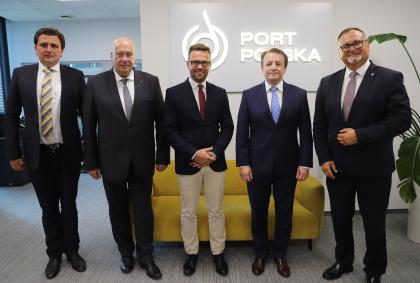
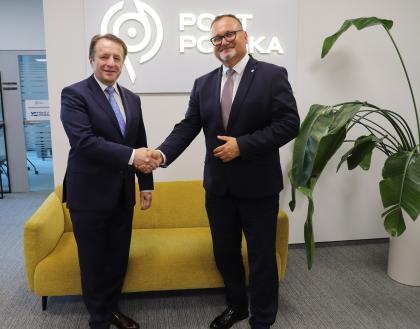
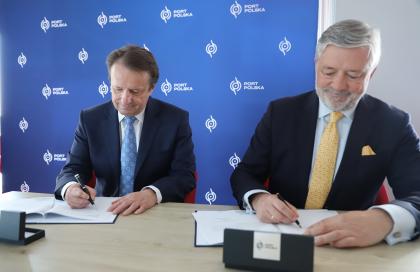
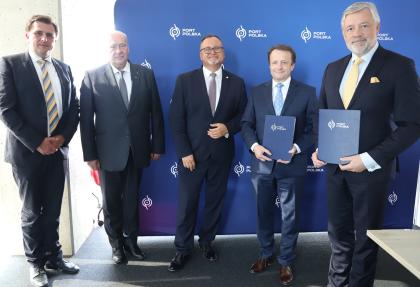
Centralny Port Komunikacyjny (CPK) and the Poznań University of Life Sciences (PULS) have signed a partnership agreement. The contract outlines the framework for joint activities in the areas of research, teaching, and expert support related to the development and implementation of strategic infrastructure investments, including the training of future personnel for the Port Polska investment program.
A key element of this collaboration is the support provided to the CPK by the PULS scientific community in the area of environmental analyses related, inter alia, to ecological compensation, wildlife crossings, and landscape architecture. This includes, specifically, efforts to minimize the environmental impact of transportation projects, the rational management of natural and water resources, the management of green spaces near rail and airport infrastructure, and the disposal of excavated soil generated during project implementation.
The agreement will enable Centralny Port Komunikacyjny to benefit from the expert knowledge of the PULS researchers. This collaboration strengthens the company’s capacity to manage the project site in an informed, responsible manner, based on knowledge and innovation.
“Modern infrastructure investments require more than just civil and transportation engineers. The field also needs experts in the environment, food, water management, biology, economics, and spatial planning. These are the areas of expertise we have been developing at our university for years,” points out Prof. Krzysztof Szoszkiewicz, Rector of PULS.
For candidates who are just entering the enrolment process, this means one very important thing: the degree programs offered by PULS address the actual needs of one of the country’s most important development projects. These joint efforts will enable students to be better prepared for the challenges linked to the implementation of modern infrastructure projects.
“This agreement connects infrastructure development with the advancement of expertise—together with the university of natural sciences, we are striving to ensure that the airport and railway we are building blend as seamlessly as possible into the surrounding landscape, and we are searching for solutions minimizing the impact on nature. “Based on scientific knowledge and responsible resource management, we are not only creating a modern transportation system but also developing the workforce that will shape its sustainable future,” says Dr. Filip Czernicki, CEO of Centralny Port Komunikacyjny, Port Polska.
From in-flight catering to the nutrition of the future
Food and nutrition are also among the areas of cooperation. Students enrolled in the food technology and human nutrition program acquire skills related to food product design, food safety, logistics, and the organization of institutional food service. In the future, they may help develop solutions for airline and rail catering, design foods that meet the needs of passengers from different cultures and religions, and create innovative functional products and systems to reduce food waste.
A green airport needs experts
Modern airports cover thousands of hectares of green spaces, water retention systems, and areas requiring environmental monitoring. That is why graduates of fields such as landscape architecture and horticulture, environmental protection, forestry, land-use planning, and environmental engineering can play an important role. Their skills range from designing green spaces, managing water resources, conducting environmental assessments, protecting biodiversity, and adapting infrastructure to climate change.
Safety for people, animals, and the environment
The operation of a large airport also raises biological and environmental challenges. Graduates in veterinary medicine, applied biology, and animal science can support activities related to biosafety, environmental monitoring, the control of animal transport and animal products, including the mitigation of bird-aircraft collisions. These are skills that are becoming essential in transportation and logistics.
Wood, design, and sustainable development
An increasing number of modern facilities are also utilizing eco-friendly building materials and solutions that align with the principles of sustainable development. Graduates in wood technology and furniture design can contribute to the design of modern public spaces, terminal equipment systems, solutions that improve acoustics, and the implementation of eco-friendly materials used in construction and transportation infrastructure.
Economists for large-scale investment projects
The construction and operation of the CPK requires experts in finance, economic analysis, management accounting, and project management. Students majoring in economics, finance, and accounting acquire the skills necessary to evaluate investment effectiveness, analyze data, manage risk, and engage in strategic planning. These skills are in demand not only in the public sector but also in major corporations and financial institutions.
Practical-oriented studies
The agreement signed between PULS and CPK opens up opportunities for internships, work placements, thesis projects, and joint research projects related to the operation of modern transportation infrastructure. For candidates, this means a chance to gain experience based on real-world economic and social challenges.
The recruitment process for the Poznań University of Life Sciences is now underway. The university offers 26 bachelor’s degree programs covering fields related to climate and environmental protection, modern technologies, data analysis, human and animal health, forestry, wood technology, food, sustainable development, and economics and finance. For more information about the programs, visit: https://up.poznan.pl/kandydat
The collaboration with Centralny Port Komunikacyjny indicates that the skills acquired at PULS are being applied in the projects that will shape Poland’s development for decades to come.
Iwona Cieślik
PULS Press Officer